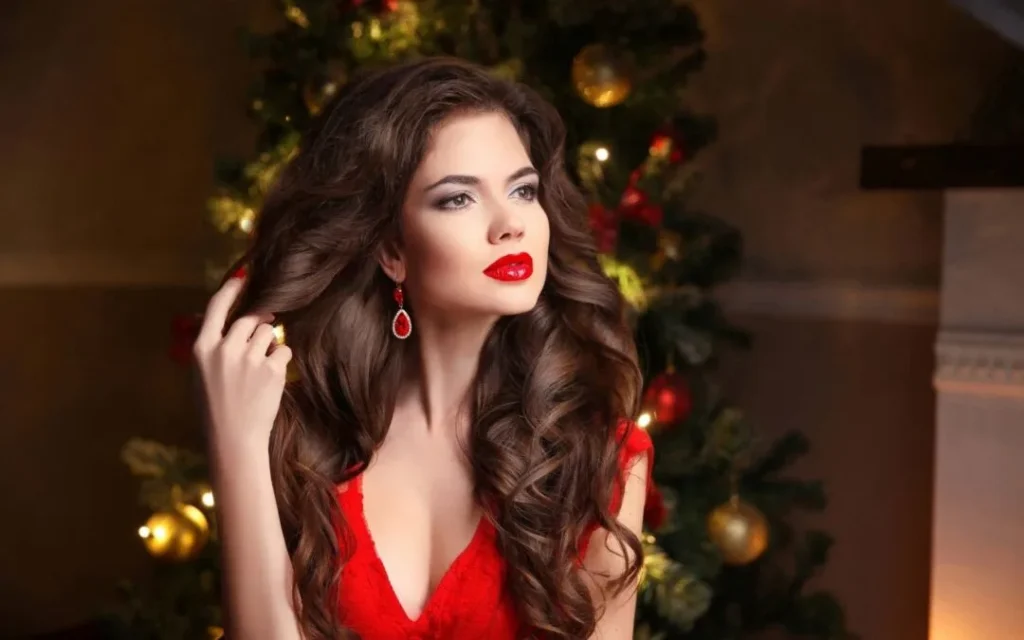
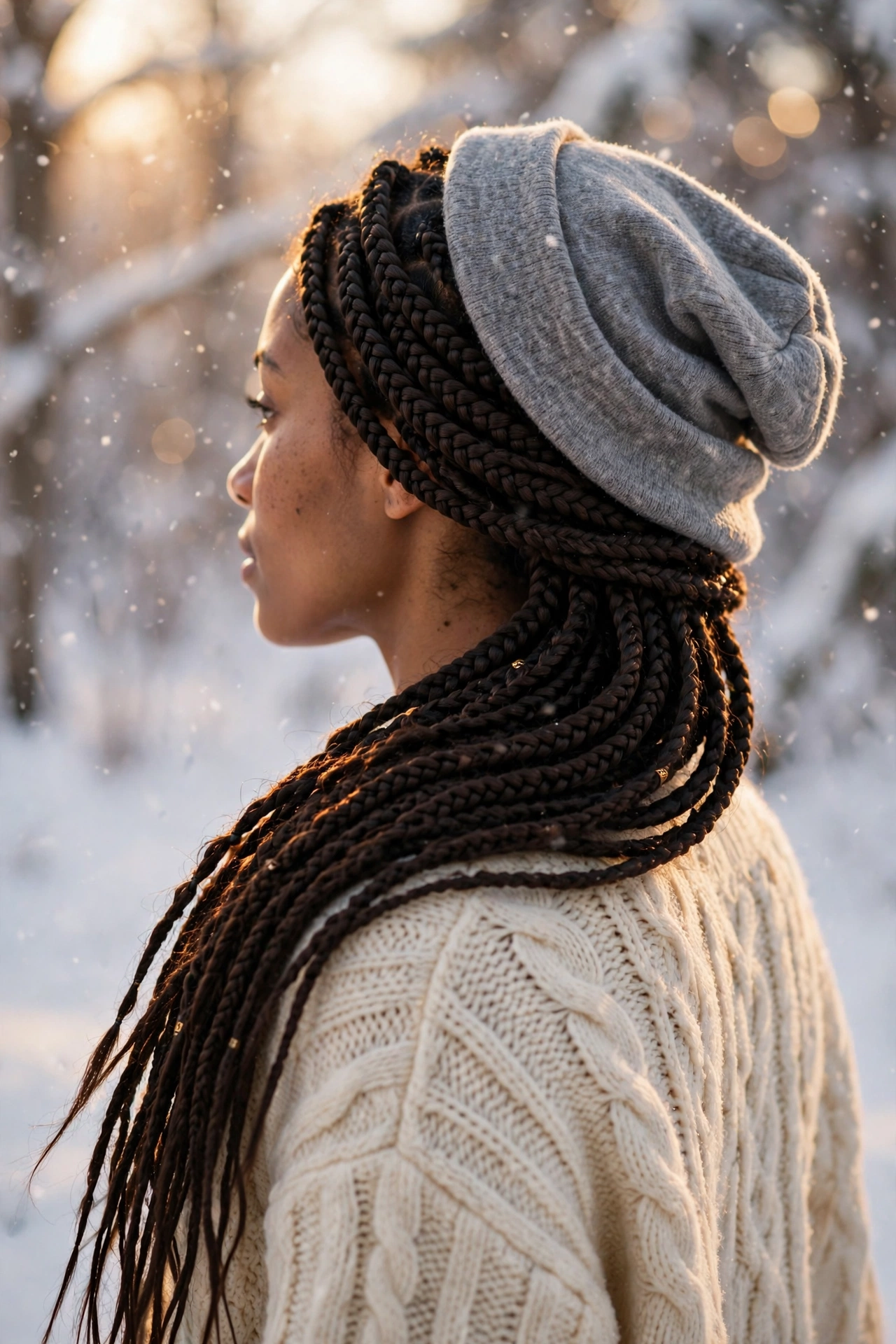
Winter is the hardest season your hair goes through all year. Cold air outside, dry heating inside, and constant friction from scarves, collars and wool hats all pull moisture out and leave hair frizzy, brittle and full of static. A braid answers almost all of it at once: your ends stay tucked away, you touch and brush your hair far less, and one good styling session can last for days. It is no surprise that Pinterest searches for winter hair braid have jumped by more than 10,000% year on year this season.
This guide collects 18 winter braids in four groups: long wear protective styles, hat friendly everyday braids you can do yourself, soft romantic braids, and party ready Christmas braids with ribbons and bows. Every style comes with an honest under a hat verdict, because a winter hairstyle that cannot survive a beanie is only half a hairstyle. At the end you will find the winter braid care routine that keeps both the braids and the hair underneath them healthy.
Classic Protective Braids
These are the set and forget winter protective styles, installed once and worn for weeks. Your own hair stays braided away from cold air and coat friction the whole time, which is exactly what fragile ends need in the coldest months.
1. Knotless Box Braids
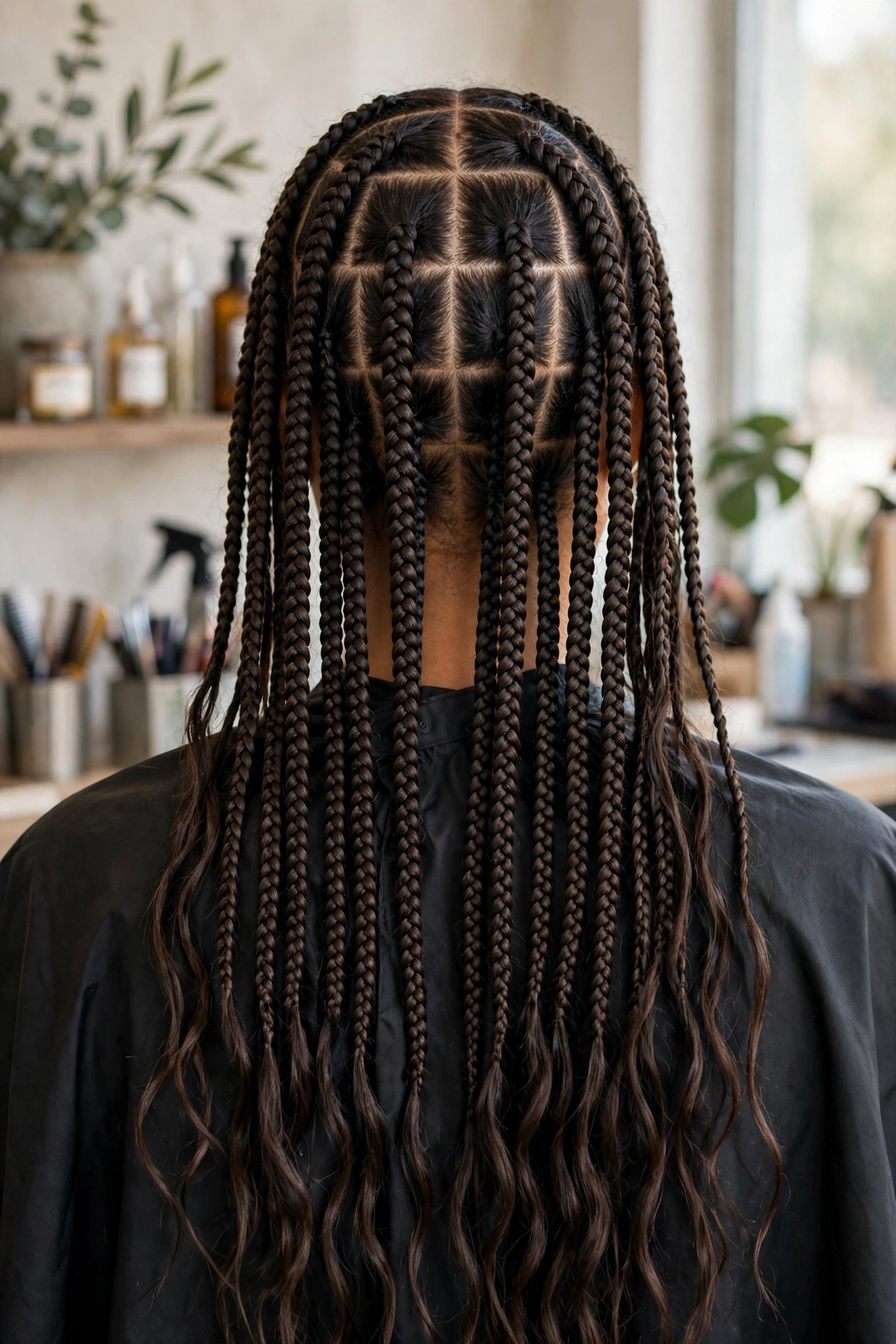
The most requested protective style of the season, and the one this medium set shows off perfectly: clean square partings, flat natural looking roots and braids falling well past the shoulders. Knotless braids are fed in gradually, so there is no tight knot pulling at the scalp, and they move like your own hair from day one. Worn loose, half up or in a high bun, one install carries you through 6 to 8 weeks of winter. Under a hat: partly. The braids themselves are bulky, so choose a satin lined beanie in a relaxed fit.
2. Winter Box Braids with a Beanie
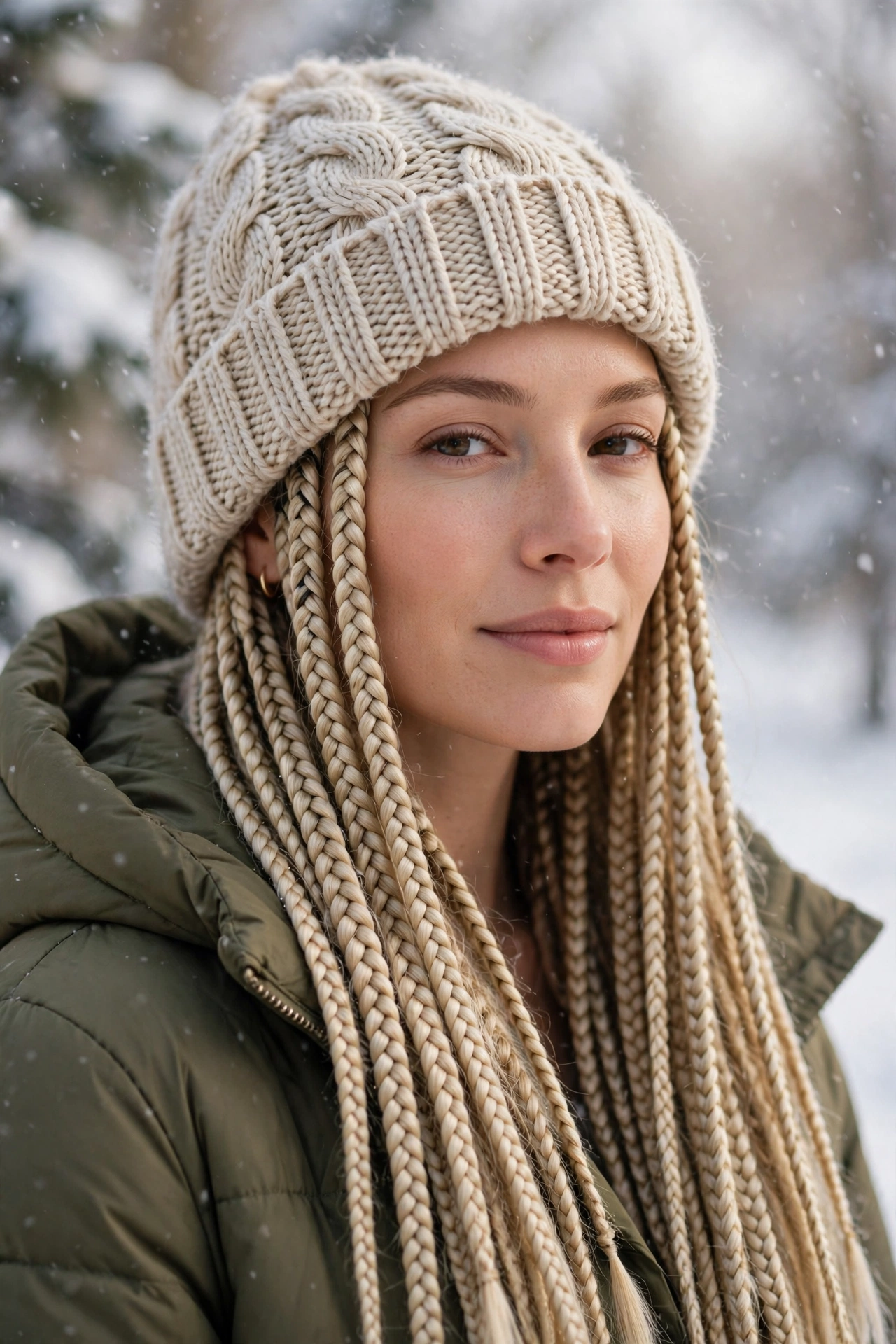
Proof that box braids and winter layers belong together. These long blonde braids sit under a chunky knitted beanie and fall straight over a winter coat, so the whole look reads cosy rather than covered up. Classic winter box braids keep every strand protected while the beanie does the warming, and a lighter braid colour like this blonde brightens up dark winter outfits. Under a hat: yes. This is the hat combination the style was made for.
3. Boho Knotless Braids
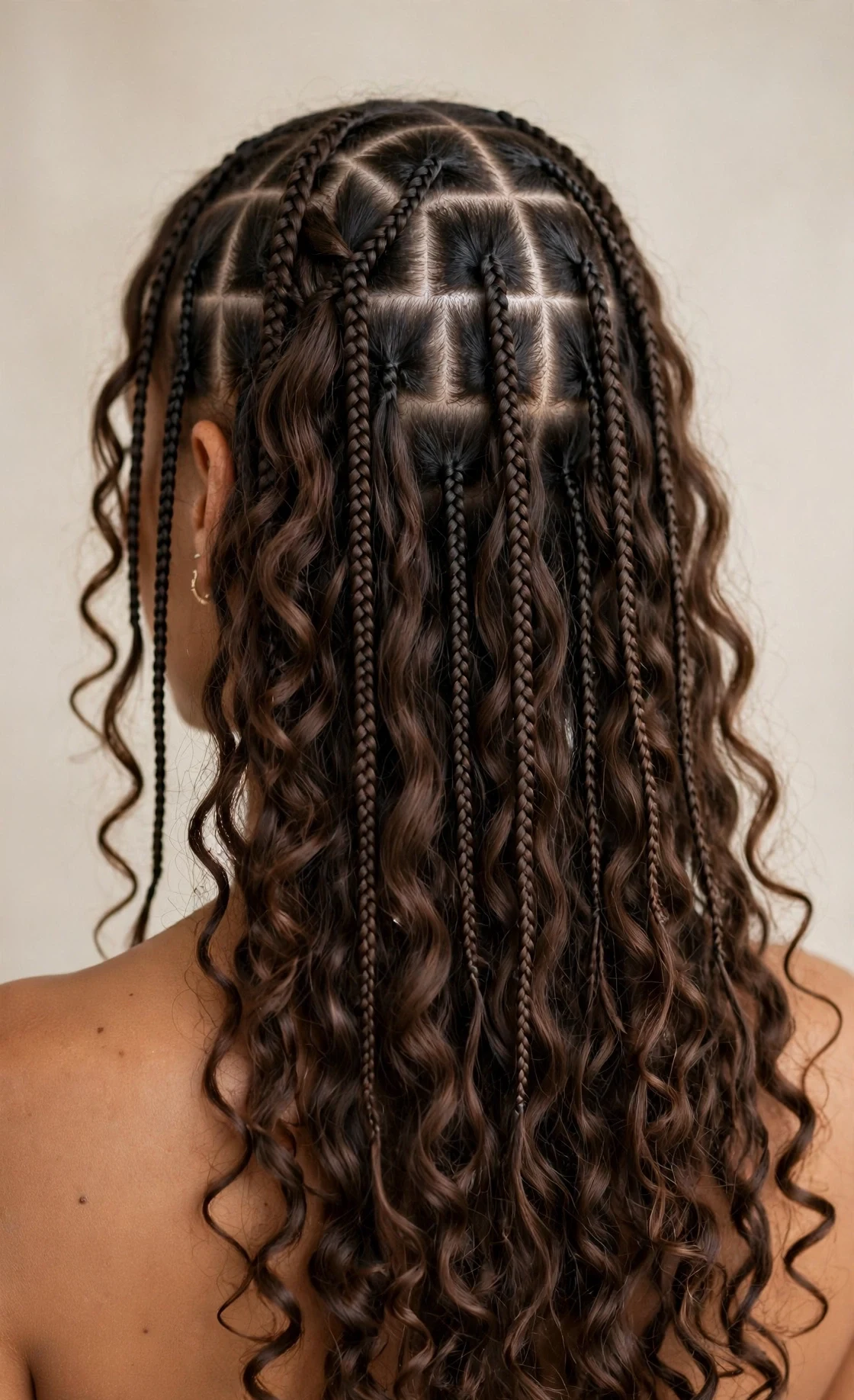
For anyone who finds full braids too sleek, boho knotless is the soft middle ground. Thin knotless braids run through a full body of loose curls, with more curls left free at the ends, and this chocolate brown version shows the neat square partings at the crown that keep it looking polished. The trade off is care: the loose curls need a light mousse or braid spray a few times a week so they stay defined instead of tangling. Under a hat: partly. A satin lining protects the curls from wool friction.
4. Fulani Braids
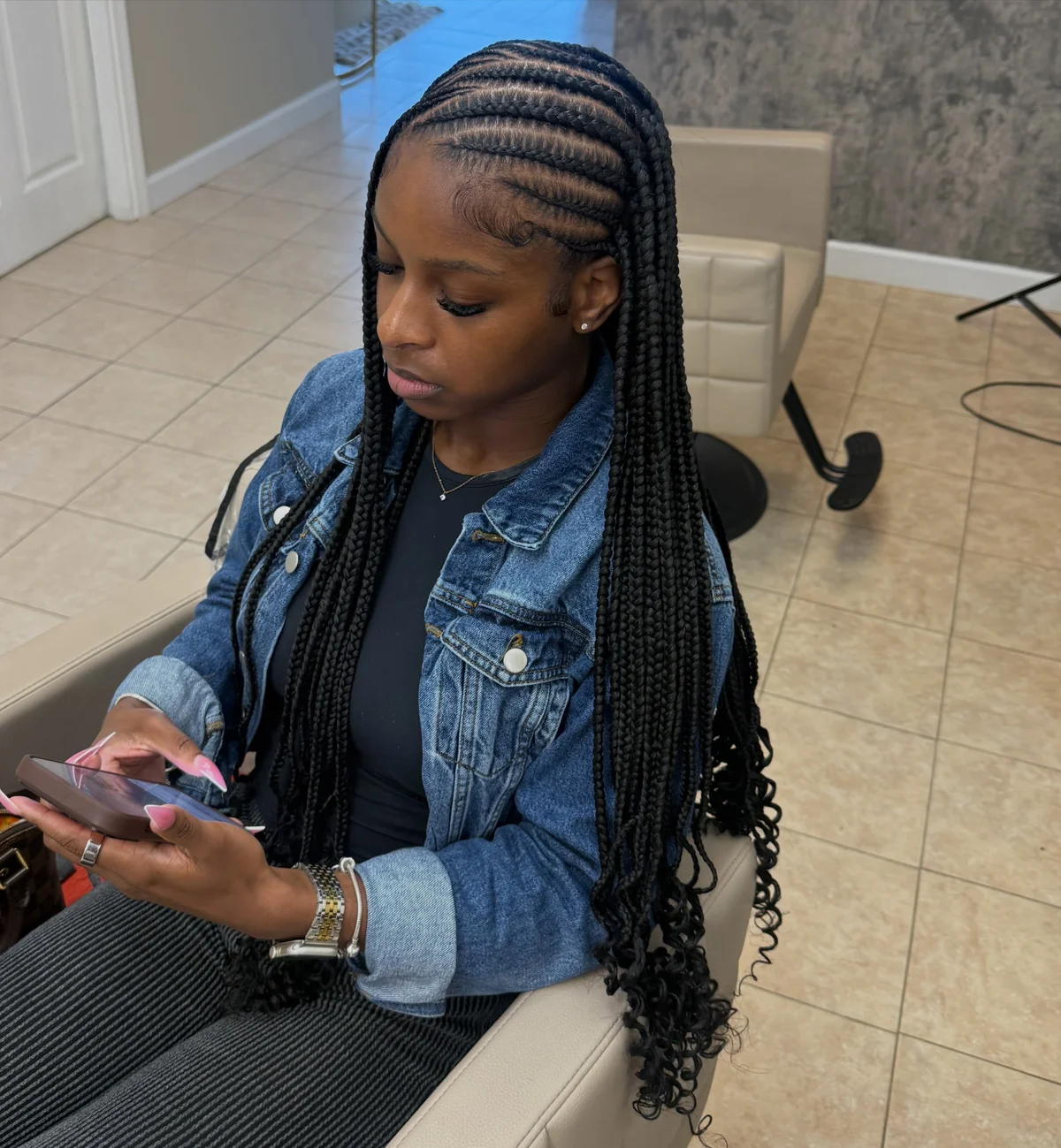
Fulani braids mix a centre cornrow pattern on top with thin braids framing the face, and the result is part protective style, part jewellery. This set keeps the lengths long with curly ends, which softens the graphic parting beautifully. Because the top lies flat, Fulani braids slip under hats more easily than most installs, and the face framing braids still show below the hat line. Add small beads or gold cuffs at the ends if you want the full traditional finish. Under a hat: partly. Flat on top, but keep any beads below the hat line.
5. Stitch Cornrows
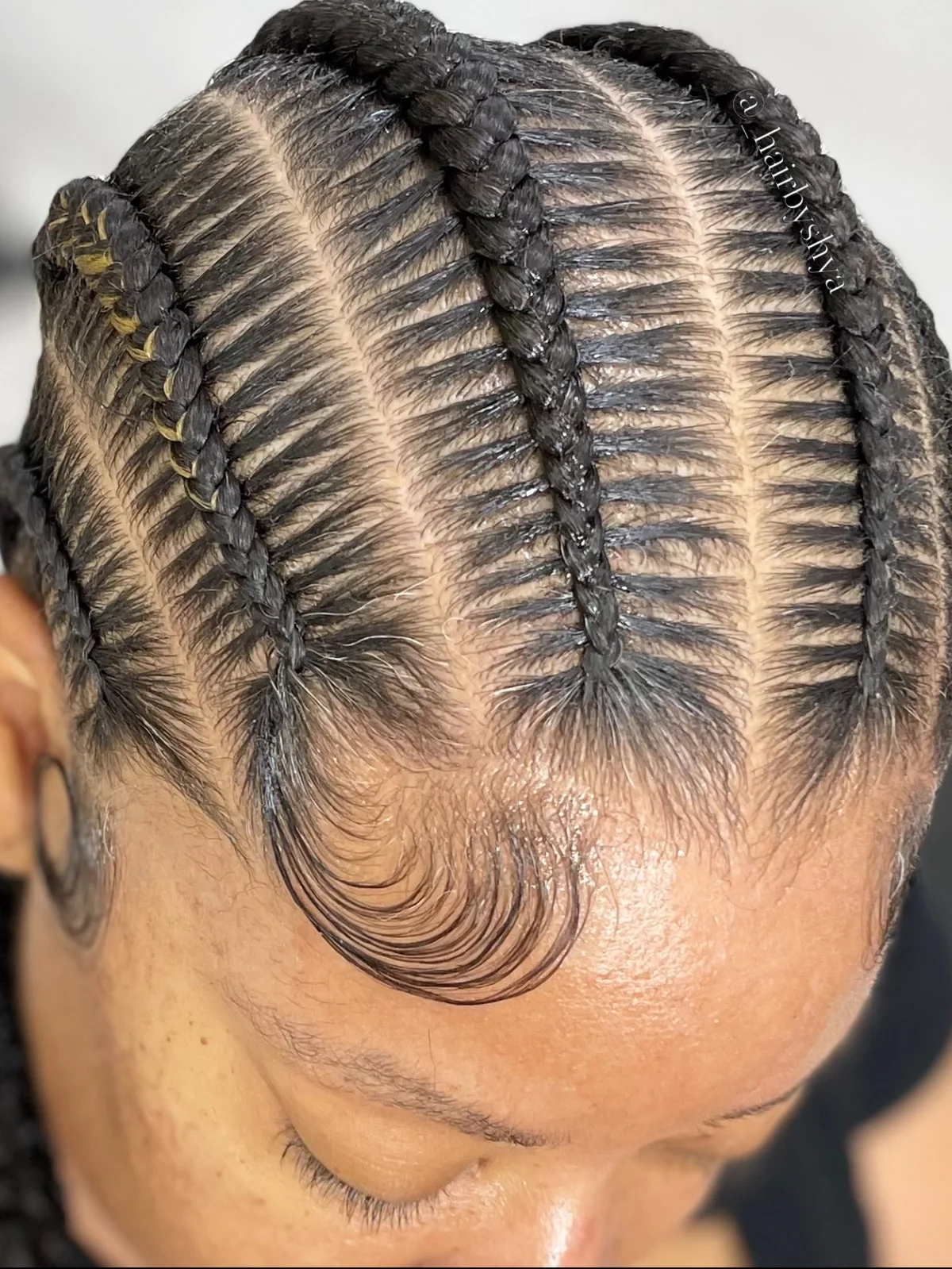
The closest thing braiding has to tailored clothing. Stitch cornrows are fed in with a stitch technique that leaves fine horizontal ridges along each row, and this close up shows how crisp the result is: every row flat, every parting exact. Nothing sits flatter against the head, which makes stitch cornrows the easiest protective style to wear under hats, hoods and helmets. Keep a silk scarf on at night and a set stays sharp for weeks. Under a hat: yes. The flattest style on this list.
Hat-Friendly Everyday Braids
No salon visit needed here. These are the braids you do at home in minutes on your own hair, chosen because each one sits flat, low or over one shoulder, exactly where a beanie, hood or scarf will not crush it.
6. Classic French Braid
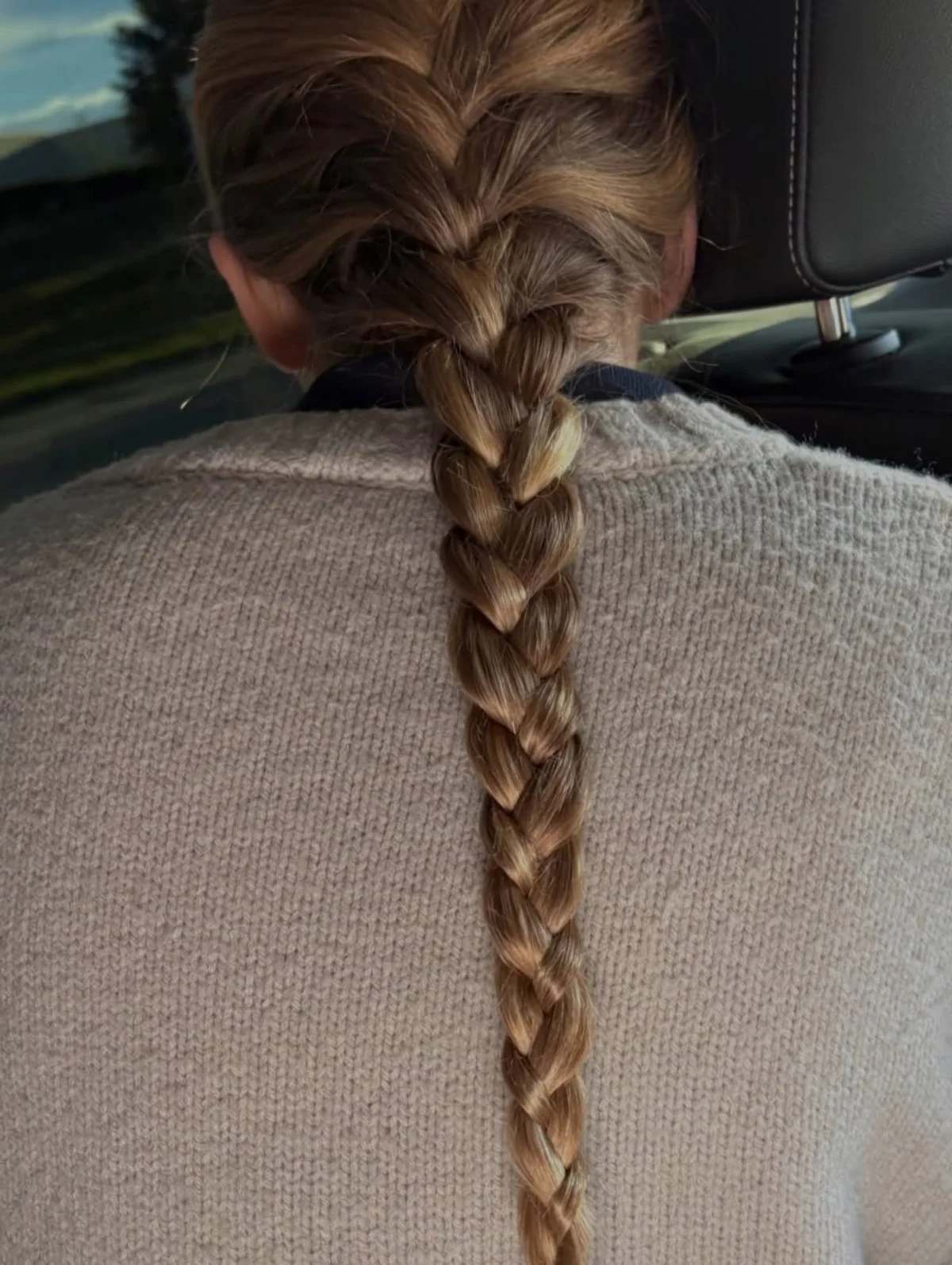
The five minute answer to a bad winter hair day. A single French braid sits completely flat against the head, keeps every layer gathered, and looks just as neat over a knitted sweater as it does under a coat hood. It works best on second day hair, which grips better than freshly washed hair, and a tiny bit of leave-in conditioner through the lengths before you braid keeps winter dryness in check. Under a hat: yes. Flat from crown to nape, nothing to squash.
7. Double Dutch Braids Under a Beanie

Dutch braids are woven under instead of over, so the braid stands up in a raised rope, and two of them under a beanie is the sportiest winter look on this list. Braid first, then pull the beanie over the top: the raised braids hold their shape, the ends hang well below the hat line, and when the hat comes off indoors the style is still perfect. This is also the kindest style for thick hair that never stays in a single braid. Under a hat: yes. Made to be worn exactly this way.
8. Chunky Side Braid with a Scarf
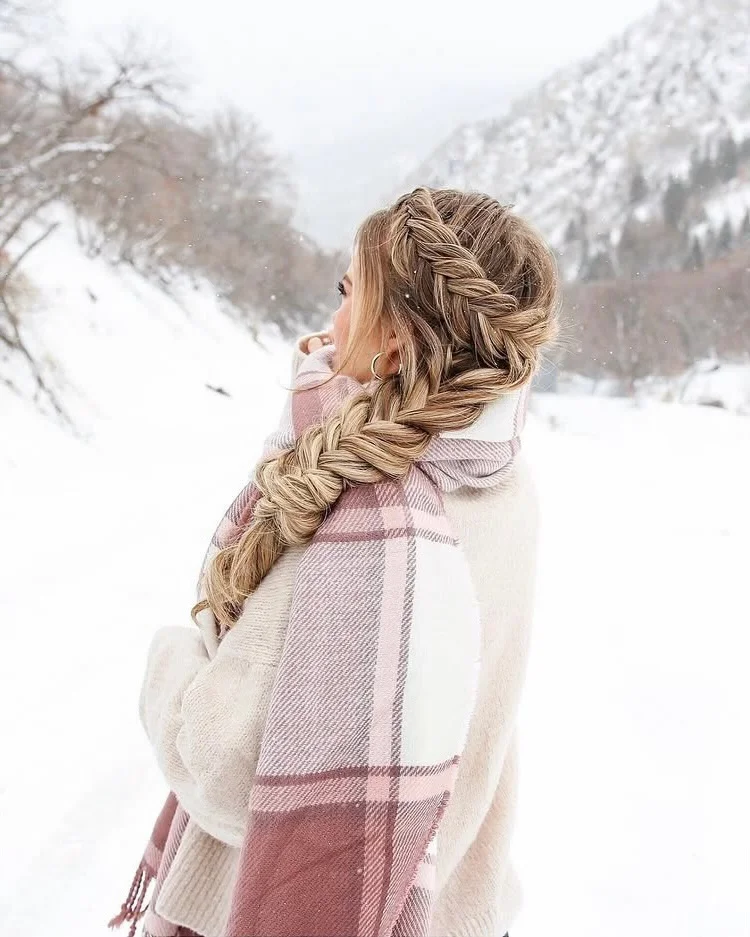
One thick, loose braid pulled over one shoulder and left to rest on top of your scarf, like this soft braid over a pink plaid blanket scarf in the snow. Keeping the braid in front does two jobs: it stops the ends rubbing against coat zips and wool, and it turns the braid into part of the outfit. Pull a few pieces loose at the front so it looks relaxed rather than severe. Under a hat: yes. Everything sits below the hat line.
9. Braided Low Bun
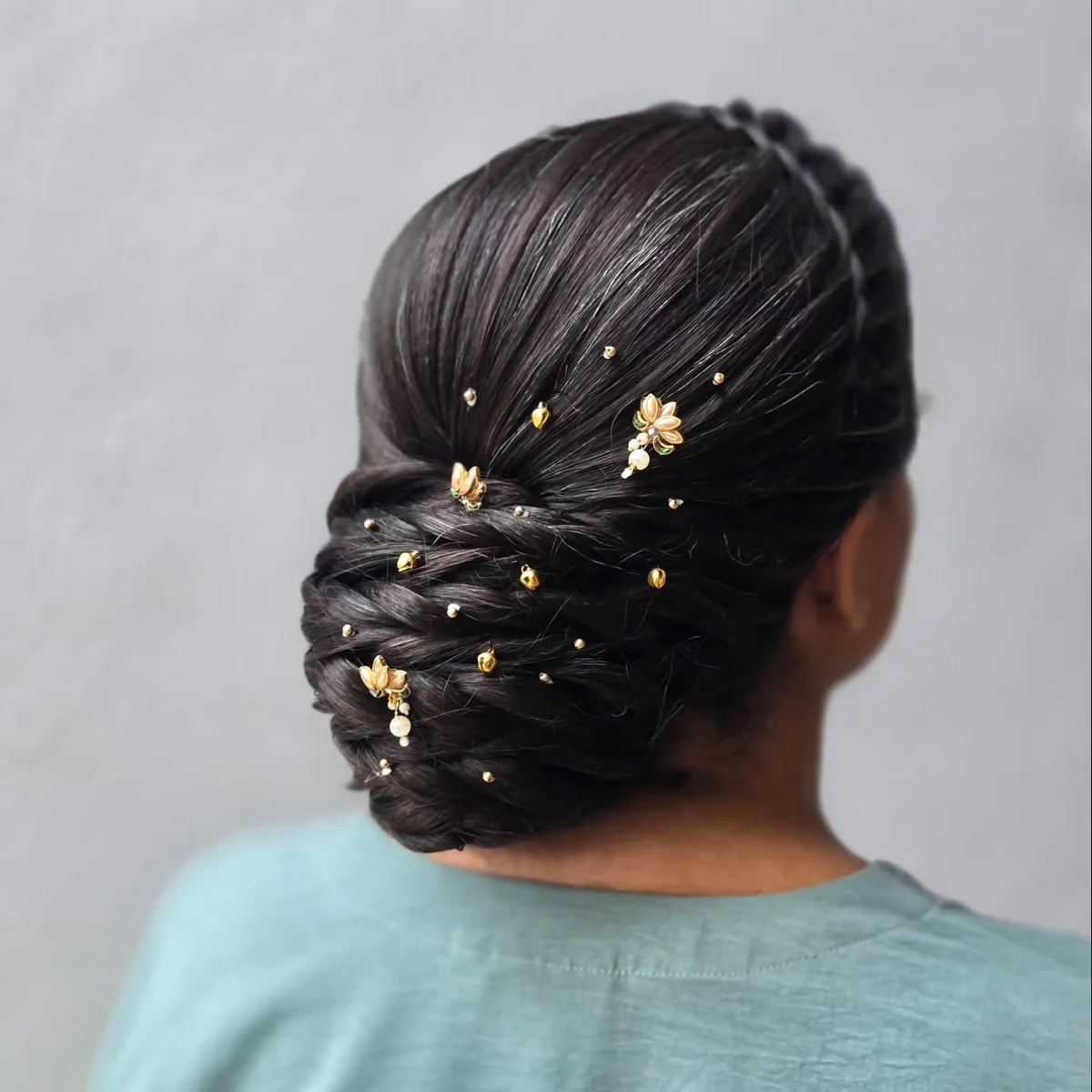
Braid a single plait, coil it at the nape and pin it flat, and you have the most practical updo of the winter. This polished version is finished with small gold pins, which lift it from gym hair to dinner hair in seconds. The bun sits below where hats and hoods rest, so nothing presses on it, and it works at shoulder length as happily as on long hair, which makes it a genuine short hair winter braid too. Under a hat: yes. It lives safely under the hat line.
10. Bubble Braid Ponytail

The braid that is not technically a braid. A low ponytail is tied off with small elastics every few inches and each section is gently puffed out into a bubble, giving you the fullest looking ponytail with zero braiding skill. It is a kind winter style too, because there is no tight weaving pulling at the roots. Keep it low and to one side so coat collars do not flatten the bubbles. Under a hat: partly. The bubbles can squash under a hood, but they puff back in seconds.
Soft Romantic Braids
Looser, softer and made for photographs. These winter braid hairstyles trade the sleek protective finish for pulled apart texture and waves, and they are the ones that fill the winter wedding, photoshoot and cosy weekend folders on Pinterest.
11. Milkmaid Braids
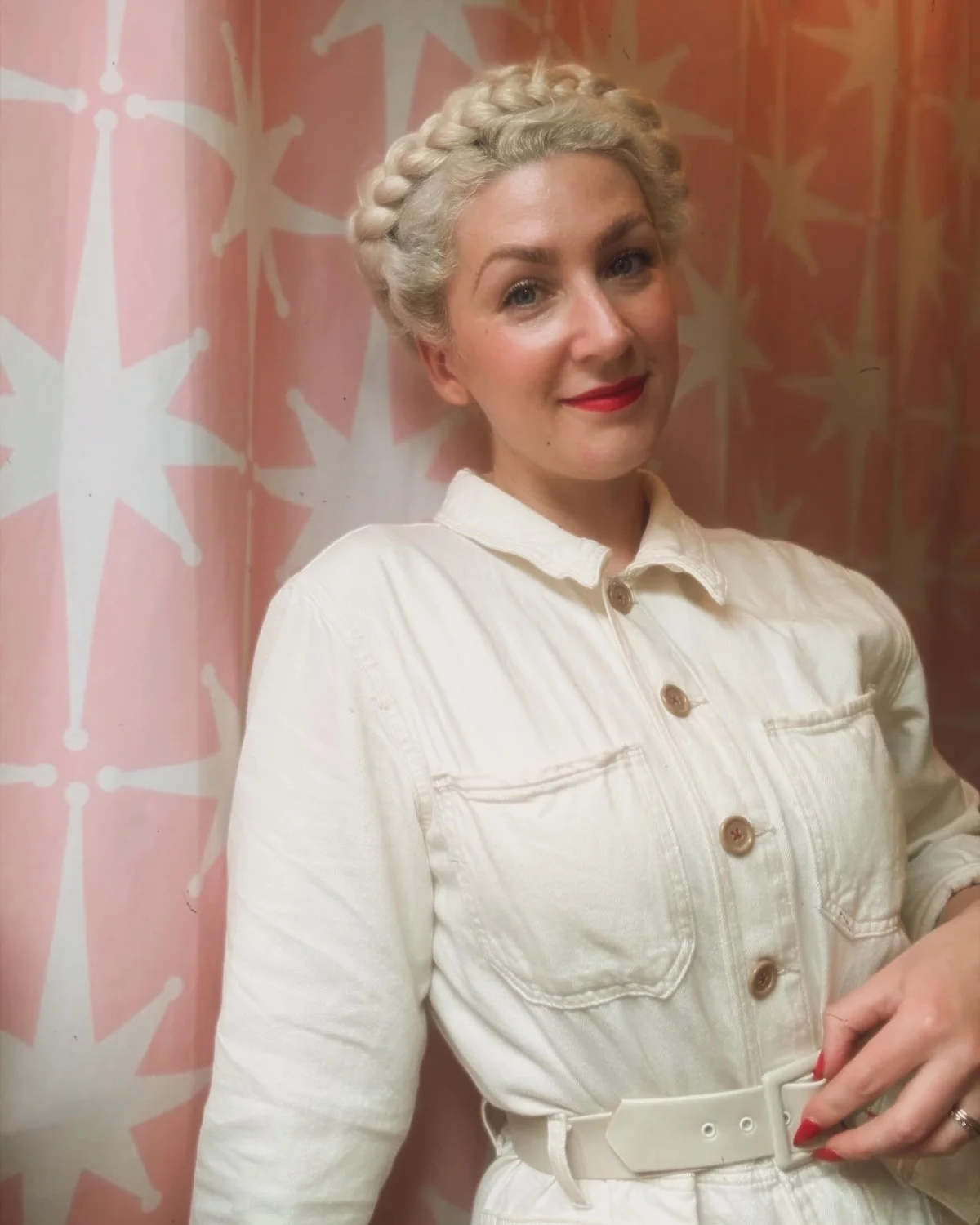
Two braids pinned across the top of the head like a woven crown. In platinum blonde, like this thick version, the plait pattern shows up beautifully, and a few loose pieces at the front keep it romantic instead of costume like. Milkmaid braids keep all of your hair off your neck and shoulders, which is a blessing under heavy coats, but they sit exactly where a hat wants to be. Under a hat: no. Save this one for indoor days, or swap the hat for earmuffs and a warm hood.
12. Loose Fishtail Over One Shoulder
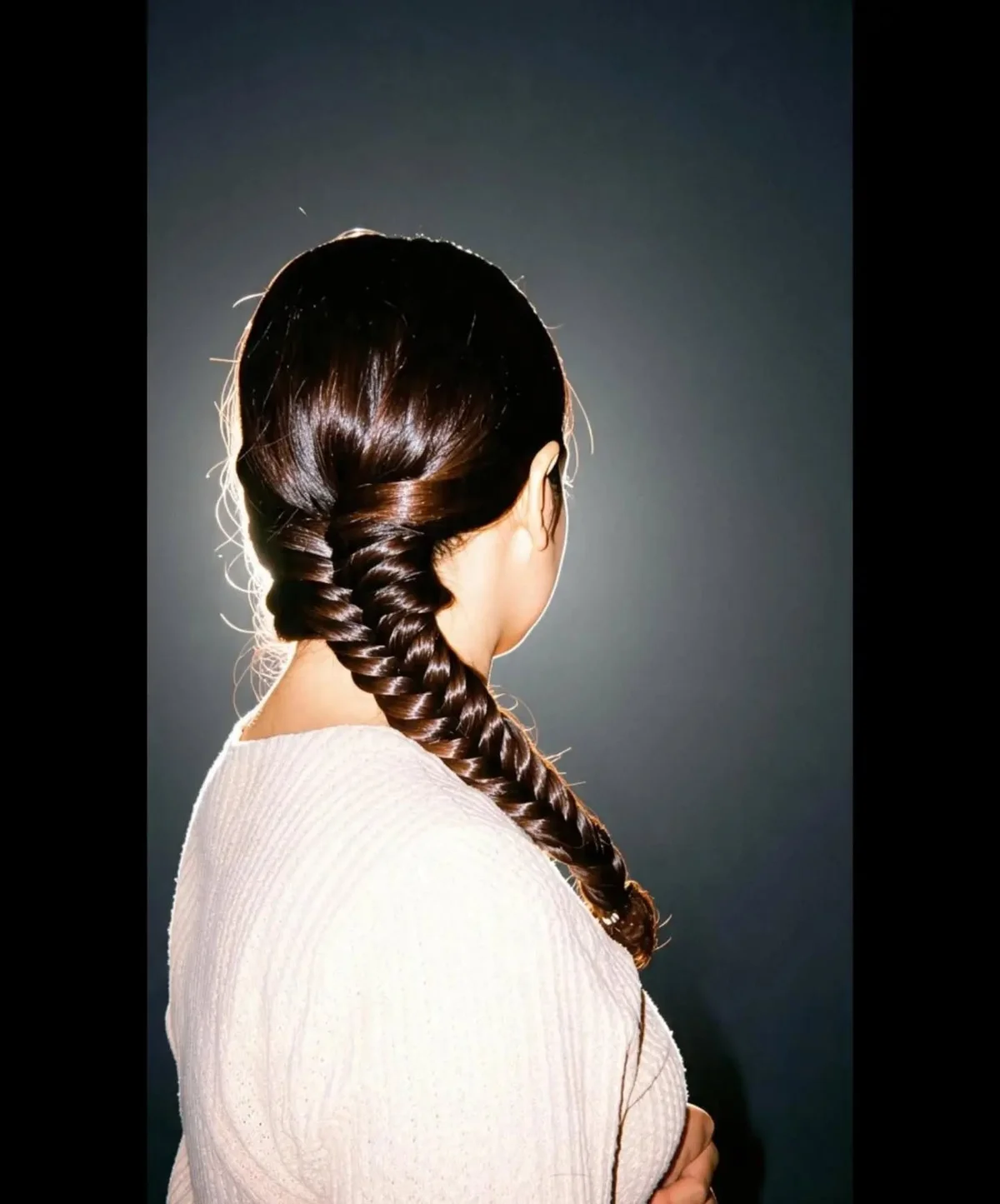
A fishtail braid is woven from just two sections, passing small pieces from side to side, and the result is that fine herringbone pattern you can see running down this full, soft version. Gently pulling the edges apart once it is tied makes it look twice as thick. Draped over one shoulder against a cream knit, it is the cosiest looking braid of the season. Under a hat: yes. Keep it pulled forward and it stays clear of collars and zips.
13. Half-Up Crown Braid with Waves
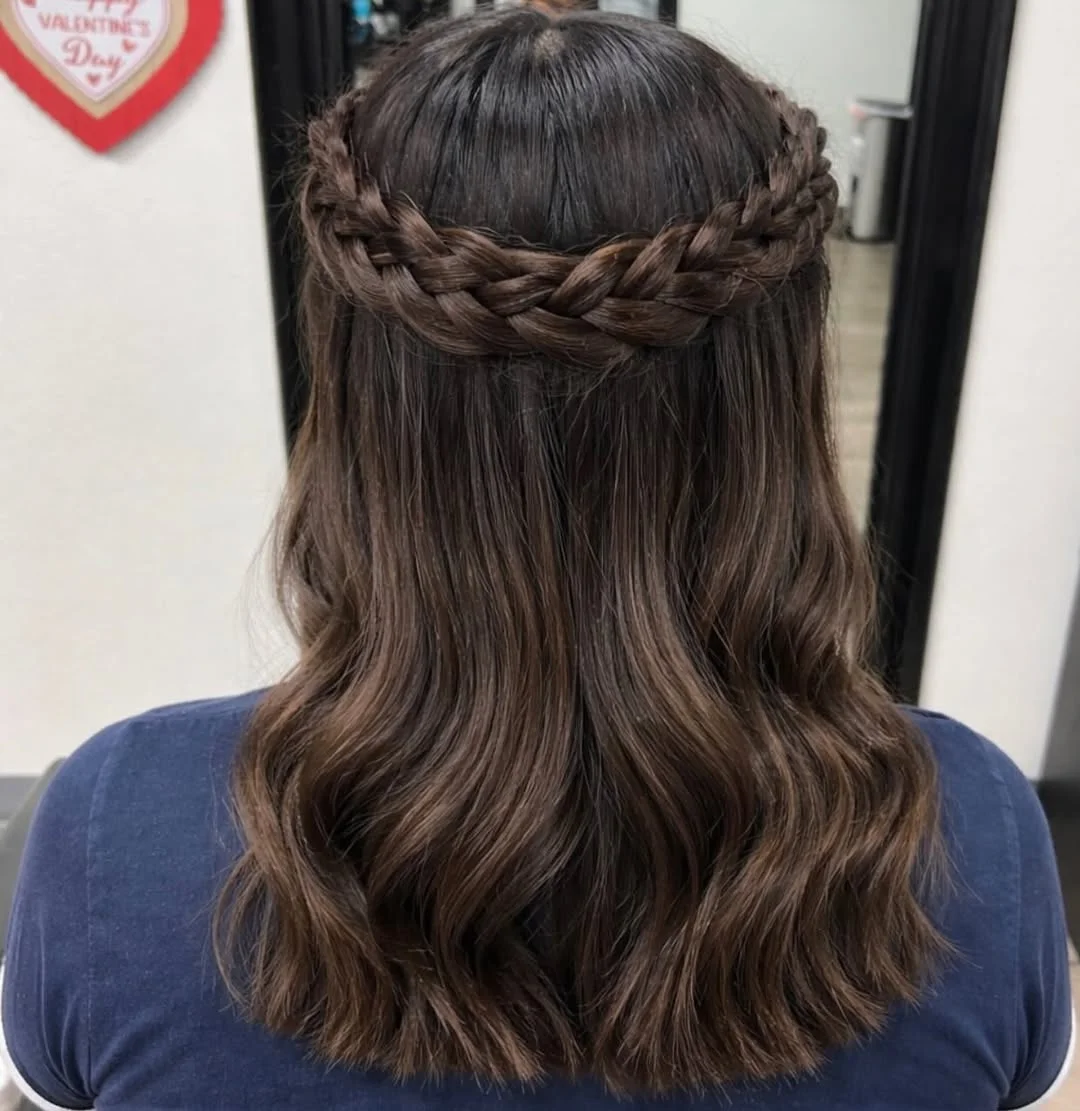
Half the romance of a full updo with none of the commitment. A braid runs along the crown and joins at the back while the rest of the hair falls in soft waves, and this shoulder length version proves you do not need long hair to wear it. It is one of the best winter braids for short hair and bobs, because the braid only needs the top layer. A light mist of hairspray over the waves fights the static that dry indoor air creates. Under a hat: partly. A tight beanie presses the crown braid flat, so choose a loose hood instead.
14. Waterfall Braid
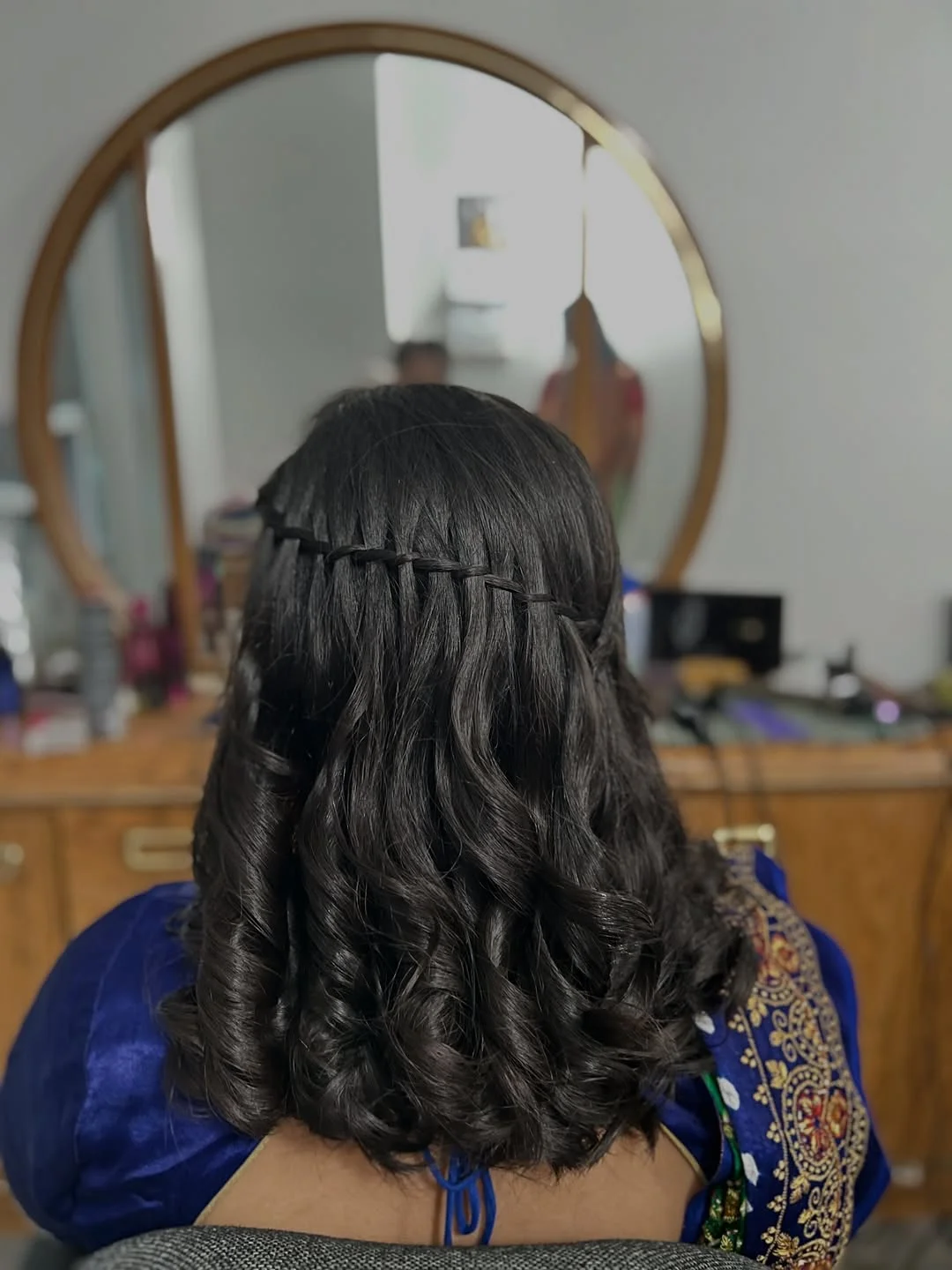
The waterfall braid drops a strand at every stitch and picks up a new one, so hair cascades through the braid like water through a fence. Woven across the back of the head into loose dark curls, like this one, it is pure winter romance and a favourite for weddings and festive photos. It is a delicate weave, so treat it as an occasion style rather than an everyday one, and set it with a flexible hold spray. Under a hat: partly. Only under a loose hood, and never under wool.
Party-Ready Christmas Braids
December asks more of a hairstyle: office parties, family dinners and midnight celebrations, all photographed. These four take everyday braids and finish them with the season’s details, velvet, ribbon and pearls. Complete the look with a festive manicure to match, like our gold glitter nails, and the whole outfit feels planned rather than rushed.
15. Crown Braid with a Burgundy Ribbon
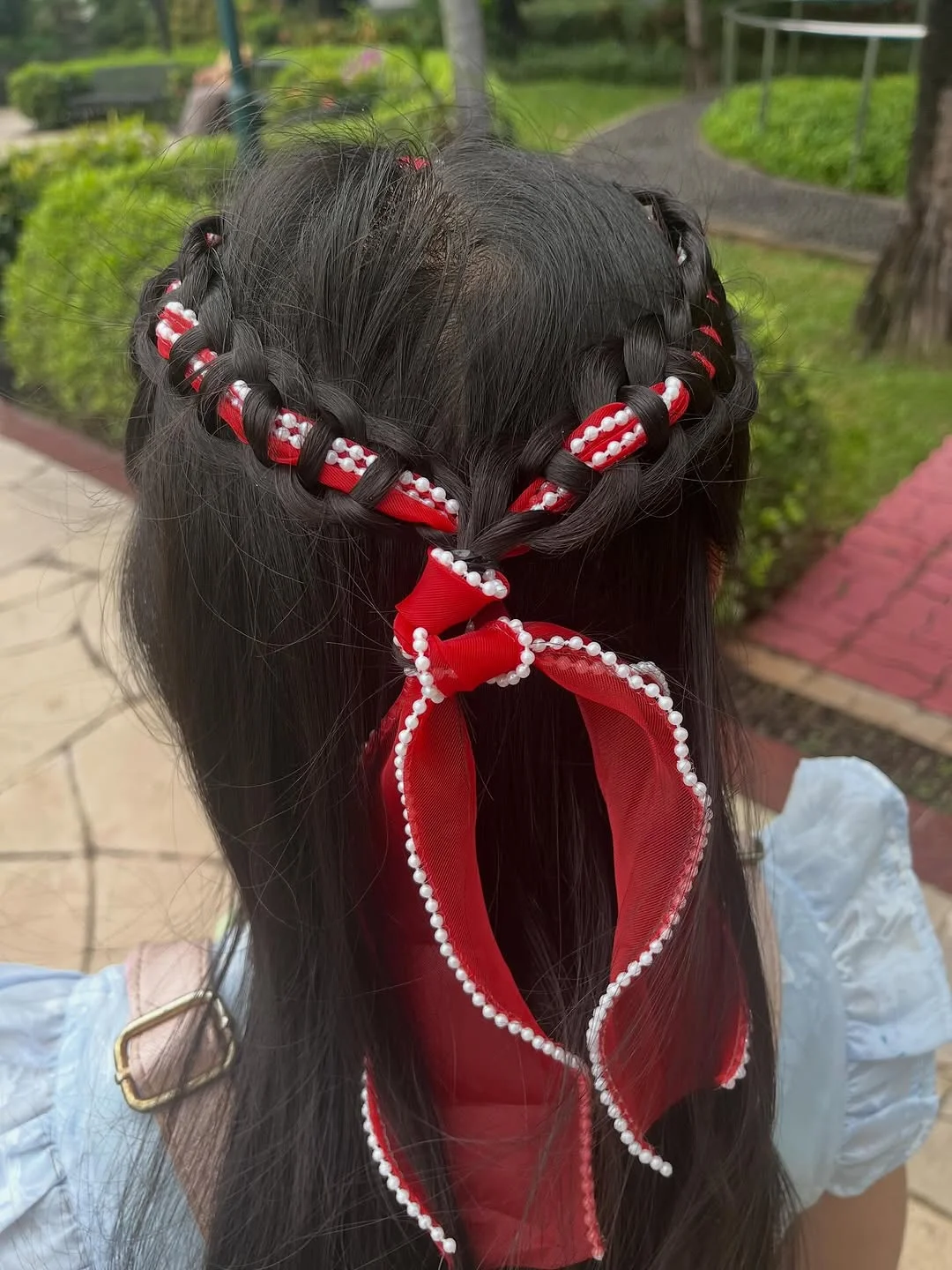
A braided crown is already elegant; weave a ribbon through it and it becomes unmistakably Christmas. This version threads a red pearl edged ribbon through both braids and ties it in a bow at the back, so the detail shows from every angle. Burgundy and deep red ribbons suit almost every hair colour, and the ribbon also hides any uneven stitches, which makes this a forgiving first party braid. Under a hat: no. A hat would crush the ribbon work, so style it after you arrive.
16. Low Braided Bun with a Velvet Bow
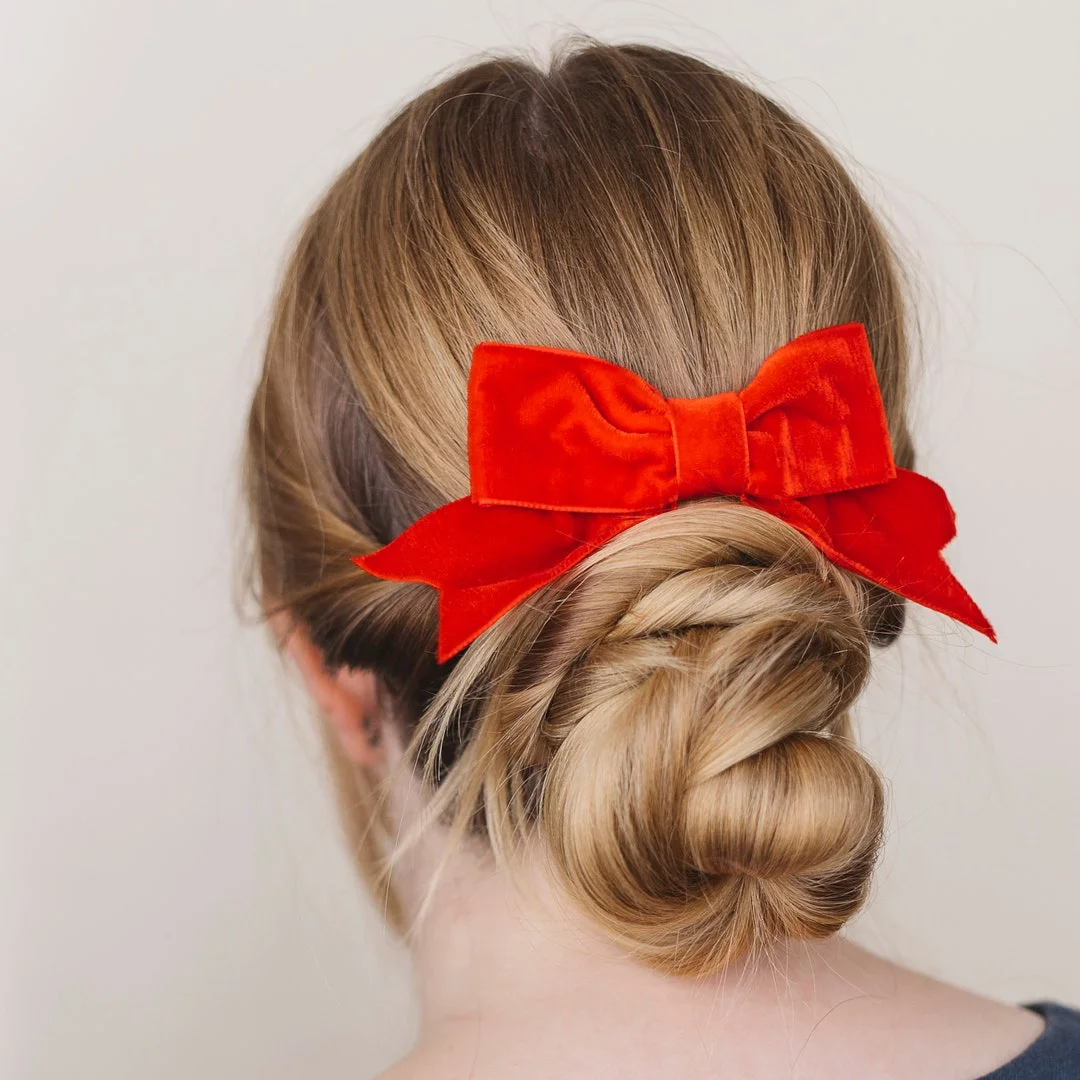
The quickest route from day hair to party hair on this whole list. The hair is smoothed into a low bun wrapped with a braid, and a large velvet bow is fixed just above it, and that one accessory does all the festive work. Red velvet is the classic Christmas choice, with burgundy and emerald close behind. Because the bow clips in last, you can wear the bun plain through the day and add the bow in the evening. Under a hat: no. The bow is the hairstyle, so it goes on indoors.
17. Double Dutch Braids with Red Ribbon
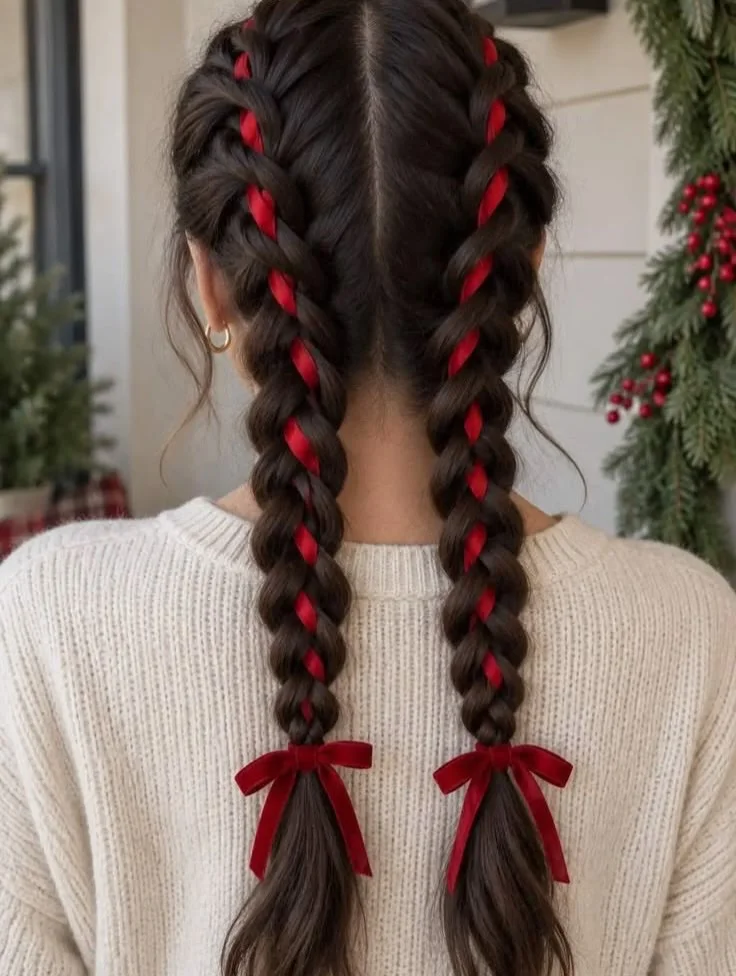
The sporty double Dutch braid from earlier in this list, dressed for Christmas. A thin red ribbon is woven through each braid as you go and tied into small velvet bows at the tips, and against a backdrop of Christmas greenery the effect is pure December. It is also genuinely practical party hair: once it is in, it will not move, wilt or need a mirror all night. Under a hat: partly. The braids sit flat enough, but keep the hat loose so the ribbons stay in place.
18. Fishtail Braid with Pearl and Sparkle Pins
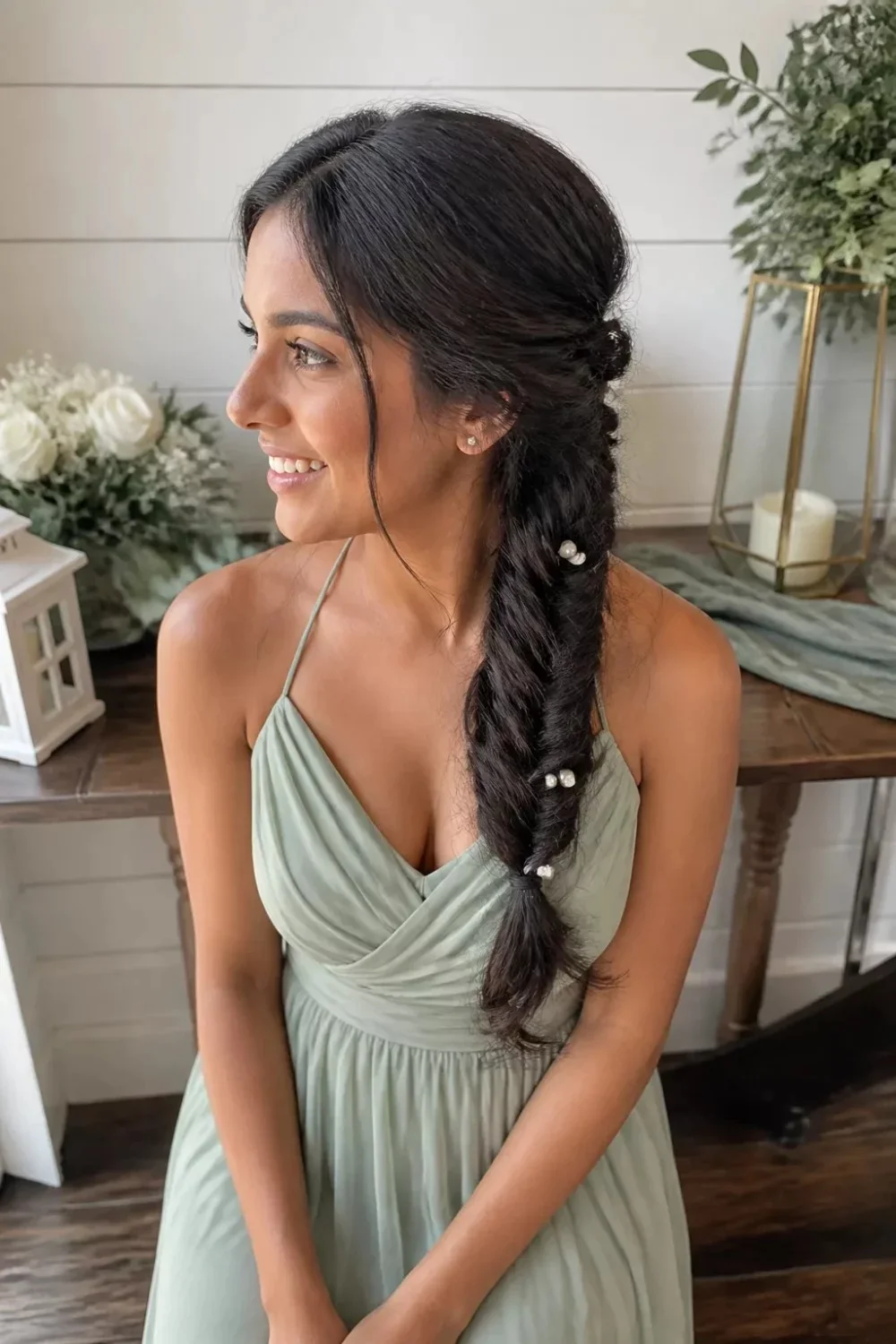
Take the loose fishtail, move it to the side and scatter pearl and sparkle pins through the weave, and a daytime braid turns into evening hair. On dark hair, like this romantic version, the pearls catch the light with every turn of your head. Push the pins in at angles along the braid rather than in a straight line, and mist the finished style lightly so nothing slides. Under a hat: no. Pins and hats do not mix, so this is the last thing you style before you go out.
How to Keep Winter Braids Fresh and Your Hair Healthy
A winter braid only protects your hair if the hair inside it stays moisturised. Cold air and indoor heating dry braids out quietly, so follow this simple routine for as long as any style is in:
- Moisturise on a schedule. Mist braids with a braid spray or water based leave-in conditioner 2 to 3 times a week, and smooth a little scalp oil along the partings once a week.
- Line your hats. A satin or silk lined beanie stops wool from rubbing braids rough and stealing moisture. If your favourite hat is unlined, wear a thin satin scarf underneath it.
- Protect your braids at night with a satin bonnet or a satin pillowcase, so the style lasts longer and your own hair keeps its moisture.
- Wash gently. For protective installs, cleanse the scalp every 1 to 2 weeks with diluted shampoo, rinse well and let the braids dry completely before covering them.
- Respect the takedown date. Protective styles should come out after 6 to 8 weeks at the latest, and everyday braids should be redone every few days so the same hairs are not stressed in the same places.
One safety rule matters more than all the others: braids should never hurt. A style that pulls, throbs or raises bumps along the hairline is too tight, and the American Academy of Dermatology warns that hairstyles that pull can lead to hair loss over time. Ask your braider to ease the tension, or take the style down and redo it looser.
Whichever of these 18 winter braids you choose first, you are giving your hair a rest at exactly the time of year it needs one, and looking put together while you do it. And if you love a soft seasonal finish, the same velvet mood works beautifully on your hands too, as our matte acrylic nails ideas show. Save your favourite braids now, book the protective styles before the coldest weeks arrive, and let your hair come back in spring in better shape than it went in.
Do braids protect hair in winter?
Yes. A braid tucks your ends away from cold air, scarves and coat collars, and it cuts down on daily brushing and heat styling, which is where most winter breakage comes from. Braids only protect well if the hair inside them stays moisturised, so keep up a braid spray or leave-in routine while a style is in.
Can I wear braids under a beanie?
Yes, and flat or low styles work best: French braids, stitch cornrows, braided low buns and side braids all sit below or flat against the head, so a beanie goes over them without crushing the shape. Choose a satin lined beanie where you can, because bare wool rubs braids rough and pulls out moisture.
How do I stop my braids from frizzing in winter?
Frizz in winter is mostly friction plus dryness. Line your hats with satin, sleep in a satin bonnet or on a satin pillowcase, and mist your braids with a braid spray or leave-in conditioner a few times a week. Smooth flyaways down with a tiny amount of mousse rather than rebraiding the whole style.
How long do winter braids last?
Everyday braids you do yourself, like a French braid or fishtail, last 1 to 3 days before they soften. Protective installs such as knotless box braids, Fulani braids and stitch cornrows last much longer, but they should always come out after 6 to 8 weeks so your own hair and scalp can be washed and rested properly.
How do I protect braids from winter dryness?
Keep moisture going in on a schedule: a water based braid spray or leave-in conditioner 2 to 3 times a week, a little oil along the scalp and partings, and satin protection under hats and at night. Dry indoor heating is as drying as the cold outside, so do not skip the routine on days you stay in.
Which braids work best under hats?
The flattest and lowest styles: stitch cornrows, a classic French braid, double Dutch braids, a braided low bun and a chunky side braid all survive a beanie happily. Crown styles, milkmaid braids and anything finished with bows or pins are better saved for when the hat comes off.